In this 5-year NIH-funded career development award (Principal Investigator: Barton), GoRA (Goal Concordance in Rheumatoid Arthritis in Diverse Populations, NIH K23 AR064372-05) aimed to better understand rheumatoid arthritis (RA) patient goals for therapy, whether those goals correspond with those of clinicians, whether concordance is associated with RA outcomes, and how best to intervene to improve communication. We developed novel patient and clinician measures of goal priorities for RA treatment using an iterative process that included a literature review as well as focus groups with patients and clinicians. We then used this measure as part of a brief survey for patients and clinicians to complete prior to a scheduled rheumatology visit to gauge treatment goals and measure concordance (agreement) between patients and clinicians.
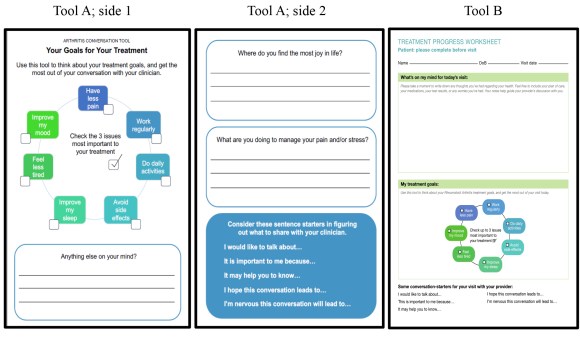
What did we find? Through the focus groups, we found that knowledge is a shared goal, but RA patients and clinicians hold divergent attitudes toward this goal. While knowledge is integral to self-management and effective shared decision-making, mismatches in attitudes may lead to suboptimal communication. Through the survey study, we found that one in five patient-clinician dyads were discordant (unaligned) around RA treatment goals. Patients with longer RA disease duration were more likely to be discordant with their clinician. This may highlight shifting goals over time for patients (more focus on function and mood with longer duration). Goal concordance was independently associated with higher adherence, which suggests that clearer communication around treatment goals may lead to improved adherence and outcomes. These findings suggest that tools to support patient goal-directed RA care may promote high-quality patient-centered care and result in reduced disparities.
 Barton Lab